
 Daniel Scott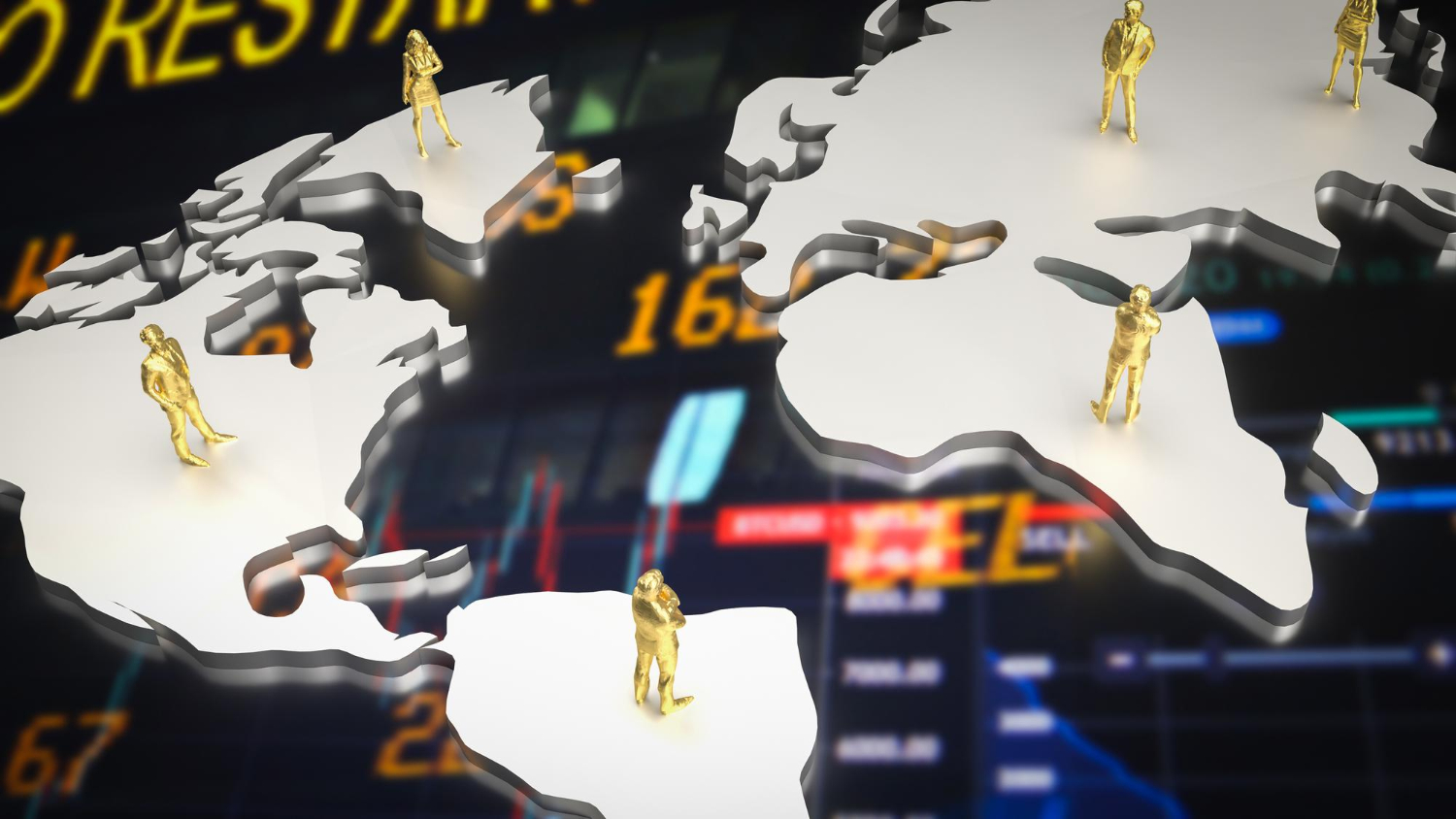
Introduction
Stock exchanges are the lifeblood of the global financial system, acting as dynamic marketplaces where investors, institutions, and governments interact. They are not merely platforms for buying and selling shares; they are the economic pulse of nations, reflecting growth, innovation, and market sentiment. Each major stock exchange represents a significant economic hub — a place where capital meets opportunity, where companies raise funds for expansion, and where investors gauge the future of industries and economies.
In an increasingly globalized economy, stock exchanges have evolved beyond national boundaries. Global investors can now access markets across continents, trade around the clock, and participate in diverse economies. From New York to Tokyo, London to Mumbai, and Shanghai to Frankfurt, the world’s top stock exchanges influence not only corporate fortunes but also global monetary flows, trade policies, and even geopolitical strategies.
This article explores the top global stock exchanges — their histories, structures, and roles — and examines how they collectively shape the world economy. It also highlights the interconnected impact these exchanges have on international finance, innovation, and global stability.
The Titans of Global Finance: Major Stock Exchanges Around the World
1.1 New York Stock Exchange (NYSE)
The New York Stock Exchange, founded in 1792, is the world’s largest and most influential stock exchange. Located on Wall Street, it is the symbol of American capitalism and financial might. With a total market capitalization exceeding $25 trillion, the NYSE lists some of the world’s biggest corporations, including Apple, Microsoft, ExxonMobil, and Johnson & Johnson.
The NYSE’s significance lies in its stringent listing requirements and high transparency standards, which make it the preferred destination for blue-chip companies. Its hybrid model combines human expertise with electronic trading systems, maintaining both tradition and innovation. The NYSE also plays a vital role in price discovery, liquidity, and investor confidence.
When the NYSE opens each day, markets around the world take cues from its performance. Its indices — especially the Dow Jones Industrial Average (DJIA) and the S&P 500 — are global benchmarks for economic health.
1.2 NASDAQ Stock Market
While the NYSE represents tradition, the NASDAQ symbolizes innovation. Established in 1971, it became the first electronic stock exchange, transforming global trading forever. NASDAQ is renowned for hosting technology giants such as Apple, Amazon, Alphabet (Google), Meta, and Tesla.
With a market capitalization of over $20 trillion, NASDAQ is the epicenter of the tech-driven modern economy. Its digital-first trading model and lower listing fees have attracted a new generation of high-growth, innovation-focused firms.
NASDAQ’s influence extends globally because it represents the future of capitalism — digital, data-driven, and disruptive. Movements in the NASDAQ Composite Index often indicate trends in the broader tech industry and investor sentiment toward innovation and risk.
1.3 Tokyo Stock Exchange (TSE)
Japan’s Tokyo Stock Exchange, established in 1878, is Asia’s largest stock market and the third largest in the world by market capitalization. Home to giants like Toyota, Sony, SoftBank, and Mitsubishi UFJ Financial, the TSE plays a critical role in the global supply chain and technological ecosystem.
The TSE is organized under the Japan Exchange Group (JPX), which merged with the Osaka Exchange in 2013 to unify Japan’s equity and derivatives markets. It has historically reflected Japan’s post-war economic boom and subsequent transformation into a technology-driven powerhouse.
The TSE’s Nikkei 225 Index serves as a barometer for not only Japan’s economy but also the broader Asian market. Global investors monitor it closely, as Japanese monetary policy, interest rates, and export data often influence world trade and currency dynamics.
1.4 London Stock Exchange (LSE)
The London Stock Exchange, founded in 1801, is one of the oldest and most respected exchanges in the world. It has long been Europe’s financial nerve center, attracting companies from over 100 countries.
The LSE’s global stature is supported by indices such as the FTSE 100, which tracks the top companies listed in the UK. Key players include HSBC, BP, Unilever, and GlaxoSmithKline.
What makes the LSE unique is its global outreach and regulatory sophistication. It provides a platform for cross-border listings, giving emerging market firms access to deep pools of international capital. The LSE also houses alternative trading venues like the AIM (Alternative Investment Market), which caters to smaller, growth-oriented businesses — making it one of the most inclusive exchanges in the world.
Despite challenges such as Brexit, the LSE remains a key connector between Europe, North America, and Asia, continuing to shape international investment flows and regulatory standards.
1.5 Shanghai Stock Exchange (SSE)
The Shanghai Stock Exchange, founded in 1990, has rapidly grown to become one of the largest exchanges globally, with a market capitalization exceeding $7 trillion. It represents China’s emergence as an economic superpower and serves as a platform for many state-owned enterprises and technology firms.
The SSE operates under strict government oversight but has been progressively liberalized, allowing greater foreign participation through initiatives such as the Stock Connect program linking Shanghai and Hong Kong. Its benchmark index, the SSE Composite Index, is a key indicator of China’s economic health and investor sentiment.
Given China’s pivotal role in manufacturing, technology, and infrastructure development, the SSE significantly impacts global commodity prices, investment trends, and trade balances.
1.6 Hong Kong Stock Exchange (HKEX)
The Hong Kong Stock Exchange bridges East and West. Established in 1891, it ranks among the top five global exchanges and serves as a financial gateway to China. Many Chinese firms, including Alibaba, Tencent, and PetroChina, have dual listings on the HKEX, allowing foreign investors easier access to Chinese markets.
The HKEX’s success stems from its robust legal framework, free-market orientation, and international investor participation. Its close ties with mainland China make it a strategic hub for global investors seeking exposure to Asian growth while benefiting from international standards.
1.7 Euronext and Deutsche Börse
Europe’s integration efforts have also extended to capital markets. Euronext, headquartered in Amsterdam, is a pan-European exchange connecting markets in France, Belgium, Ireland, Portugal, and Italy. It provides a single platform for trading equities, bonds, and derivatives, symbolizing the continent’s financial unity.
Similarly, Deutsche Börse, based in Frankfurt, operates the Frankfurt Stock Exchange and the derivatives platform Eurex. It plays a crucial role in the European financial ecosystem, hosting major German firms like Siemens, Volkswagen, and SAP.
Together, these exchanges provide stability and depth to the European investment landscape, ensuring competitiveness with U.S. and Asian counterparts.
The Economic and Strategic Impact of Global Stock Exchanges
2.1 Capital Formation and Economic Growth
The most vital function of stock exchanges is capital formation — channeling savings into productive investments. By listing shares, companies raise funds for expansion, innovation, and job creation. This process drives GDP growth and fosters entrepreneurship.
For example, the U.S. equity market has enabled countless startups to grow into global giants, fueling technological revolutions. Similarly, China’s exchanges have supported vast infrastructure development and industrial modernization.
2.2 Wealth Creation and Distribution
Stock exchanges democratize wealth creation by enabling individuals to own a piece of the world’s largest corporations. Over time, equity investments have outperformed most other asset classes, providing long-term returns that contribute to retirement savings, education funds, and intergenerational wealth.
However, wealth distribution remains uneven. Developed economies with mature exchanges often see broader participation, while emerging markets face challenges such as limited access, financial illiteracy, and volatility. Global exchanges thus play a dual role — as tools of opportunity and as mirrors of inequality.
2.3 Globalization and Market Interconnectivity
In today’s world, no stock market operates in isolation. Advances in technology, trade, and communication have made global markets interconnected and interdependent. A sharp fall in one major exchange can trigger ripple effects worldwide — as seen during the 2008 financial crisis and the COVID-19 pandemic.
For instance, a rate change by the U.S. Federal Reserve affects investor behavior across Tokyo, London, and Mumbai within hours. Similarly, geopolitical tensions or policy changes in China can influence commodity prices and investment flows globally.
This interconnectivity has benefits — it enables capital mobility, diversification, and international collaboration — but it also poses systemic risks, where crises spread faster than ever before.
2.4 Technological Transformation and Digital Trading
Stock exchanges have been at the forefront of technological innovation. From the NASDAQ’s electronic trading in the 1970s to today’s AI-powered algorithmic systems, the digital transformation has increased market efficiency and reduced transaction costs.
The emergence of blockchain technology, decentralized finance (DeFi), and tokenized assets promises to further revolutionize global exchanges. For example, exchanges like the Singapore Exchange (SGX) and Swiss SIX Exchange are experimenting with blockchain-based settlements and digital bonds.
Yet, with innovation comes risk — cybersecurity threats, algorithmic errors, and flash crashes highlight the need for robust oversight. Regulators and exchanges must balance innovation with stability to protect investors and maintain trust.

2.5 Regulatory Influence and Global Standards
Each stock exchange operates under a regulatory framework that ensures transparency, fairness, and investor protection. However, globalization has driven the need for harmonized standards, as cross-border listings and investments grow.
Institutions like the International Organization of Securities Commissions (IOSCO) and the World Federation of Exchanges (WFE) promote best practices, but discrepancies remain — especially between developed and emerging markets.
For example, while U.S. markets emphasize stringent disclosure norms, others focus more on capital accessibility. These variations can create arbitrage opportunities but also regulatory friction.
2.6 Economic Signaling and Policy Influence
Stock exchanges act as barometers of economic health. Policymakers, central banks, and investors closely monitor indices to gauge confidence, inflation, and growth. A rising market often signals optimism, while a sharp decline can trigger political and monetary interventions.
For example, a surge in the S&P 500 often strengthens the U.S. dollar and influences global investment patterns. Likewise, Japan’s Nikkei performance affects regional currency valuations and trade strategies. Thus, exchanges shape not only corporate behavior but also macroeconomic policy decisions worldwide.
The Future of Global Stock Exchanges: Trends, Challenges, and Opportunities
3.1 The Rise of Emerging Markets
While traditional giants like the NYSE and NASDAQ dominate, emerging markets are becoming increasingly important. Exchanges in India (NSE and BSE), Brazil (B3), Singapore (SGX), and South Korea (KOSPI) are expanding rapidly as their economies grow and investors seek diversification.
India’s National Stock Exchange (NSE), for instance, now ranks among the top in daily trading volume, reflecting the country’s booming middle class and tech-driven economy. These markets are becoming global investment magnets, reshaping capital flows.
3.2 ESG Investing and Sustainable Finance
Environmental, Social, and Governance (ESG) investing has become a central theme. Stock exchanges are increasingly requiring listed companies to disclose sustainability metrics. The London Stock Exchange and Euronext, for example, have launched green bond segments to fund climate-friendly projects.
This shift toward sustainable capitalism indicates that the role of exchanges is evolving — from profit facilitators to drivers of responsible growth. Investors now reward companies that balance profitability with purpose, marking a paradigm shift in global finance.
3.3 Digital Assets and Crypto Exchanges
The rise of cryptocurrency and blockchain-based trading platforms represents both a challenge and an opportunity. Exchanges like Binance and Coinbase have demonstrated how decentralized digital assets can rival traditional markets in liquidity and participation.
Traditional exchanges are responding by exploring digital asset listing, tokenization of securities, and blockchain clearing systems. In the coming decade, we may see hybrid ecosystems where traditional stocks, digital tokens, and ETFs coexist seamlessly on regulated platforms.
3.4 Geopolitical and Economic Volatility
Political uncertainty, trade wars, and inflationary pressures remain major threats. Stock exchanges must adapt to frequent disruptions — from U.S.-China trade tensions to energy crises and currency fluctuations.
The resilience of global exchanges during the COVID-19 pandemic demonstrated their importance as stabilizing mechanisms, but it also revealed vulnerabilities in global supply chains and investor psychology.
3.5 Inclusion and Financial Literacy
The democratization of investing — through apps, fractional shares, and online education — has made stock markets more accessible. Yet, financial literacy gaps persist, especially in developing economies.
Exchanges, regulators, and governments must collaborate to promote education, ethical investing, and protection against fraud. The long-term health of global markets depends not just on capital but on informed participation.
Conclusion
Stock exchanges are far more than trading platforms — they are engines of economic progress, mirrors of national ambition, and bridges of global interconnection. From Wall Street’s legacy to Shanghai’s rapid ascent and Mumbai’s growing influence, these financial hubs collectively power the modern world economy.
Their impact extends across all dimensions: they create jobs, mobilize savings, fuel innovation, and shape government policy. Yet, they also carry immense responsibility — to uphold transparency, ensure fairness, and drive sustainable progress.
As the world transitions toward a digital, interconnected, and environmentally conscious future, the role of stock exchanges will only expand. Whether through blockchain integration, ESG investing, or cross-border collaboration, they will continue to evolve — linking economies, empowering individuals, and defining the contours of 21st-century finance.
In essence, the global network of stock exchanges represents the heartbeat of capitalism — a living system that connects aspiration with opportunity, risk with reward, and local enterprise with global destiny.