
 Daniel Scott

Introduction
Consumer spending remains one of the most important forces shaping the U.S. economy, particularly at a time when interest rates are still relatively high and inflation has not yet fully returned to the Federal Reserve’s long-term objective. Household purchases of goods and services influence business revenues, employment, production, corporate investment and, ultimately, economic growth. When American consumers continue spending, businesses have stronger incentives to maintain inventories, hire workers and invest in expansion. When households begin cutting back, the effects can spread through the wider economy.
The current U.S. environment presents an interesting combination of resilience and pressure. The Federal Reserve raised its federal funds target range by 25 basis points in September 2026 to 3.75%–4.00%, citing elevated inflation while noting that domestic spending had remained resilient. This means borrowing costs remain significant for households even as economic activity continues to expand.
Official data show that consumer spending has not collapsed under the weight of higher financing costs. The Bureau of Economic Analysis reported that personal consumption expenditures increased 0.2% in July 2026. Disposable personal income increased 0.5%, while the personal saving rate reached 3.0%. Retail activity has also remained firm. According to the U.S. Census Bureau, retail and food-service sales in August 2026 rose 1.2% from July and were 6.0% higher than a year earlier, although these figures are not adjusted for price changes.
However, strong headline spending does not mean every household is financially comfortable. Higher interest rates affect consumers differently depending on income, debt levels, savings and access to credit. Mortgage borrowers, credit-card users and people financing vehicles or other major purchases can face much greater pressure than households with little debt and substantial savings.
The importance of consumer spending, therefore, goes beyond whether Americans are spending more dollars this month than last month. The bigger question is whether households can continue supporting demand without creating additional financial stress or keeping inflation elevated for too long.
Why Consumer Spending Matters So Much to the U.S. Economy
Consumer spending is a central component of economic activity in the United States. American households purchase everything from groceries, vehicles and clothing to healthcare, housing-related services, travel, entertainment, financial services and other forms of consumption. These purchases generate revenue for companies and income for workers throughout the economy.
The relationship works in several stages. A household buying a product creates revenue for a retailer. The retailer needs inventory, transportation and employees. Suppliers then purchase materials and services from other companies. Employees receive wages and use part of those wages for their own spending. This creates a continuing economic cycle.
That is why consumer demand can become particularly important when other areas of the economy weaken. Business investment and housing activity can fluctuate sharply because they are often sensitive to interest rates and expectations. Government spending can also change according to fiscal policy. Consumer demand, while not immune to economic conditions, provides a broad underlying source of activity.
Recent economic data illustrate the strength of domestic demand. In the second quarter of 2026, real final sales to private domestic purchasers, which combine consumer spending and private fixed investment, increased at a 4.2% annualized rate according to the BEA’s second estimate. The Federal Reserve also stated in September that domestic spending had remained resilient.
The composition of spending is also important. In July, the $36.3 billion increase in current-dollar PCE was driven by an $86.2 billion increase in services spending, while goods spending declined by $49.9 billion. This indicates that consumers are not necessarily behaving in the same way across every category.
Services can remain relatively persistent because many are necessities or recurring expenses. Healthcare, insurance, housing-related services, communications and other services may be difficult to reduce quickly. Goods purchases, by contrast, can sometimes be postponed. A household may delay purchasing furniture, electronics or another expensive item if financing costs are high.
This distinction matters for monetary policy. If demand remains strong, businesses may retain pricing power, potentially making it harder for inflation to return to the Federal Reserve’s 2% objective. On the other hand, if consumers suddenly reduce spending, economic growth can slow significantly.
The Federal Reserve is therefore watching the balance between demand and inflation closely. Its policy rate influences borrowing conditions across the economy. Changes in the federal funds rate affect other short-term interest rates and can influence household and business spending decisions.
For consumers, the effect is often indirect. A higher federal funds rate does not mean every consumer loan immediately increases by the same amount. Instead, monetary policy influences broader financial conditions, including lending rates, credit availability and market interest rates.
This makes consumer behavior one of the most important indicators of whether restrictive monetary policy is having the intended effect.
How Elevated Interest Rates Are Changing Household Financial Decisions
Higher interest rates affect consumer spending through several channels. The first is the cost of borrowing. Credit cards, auto loans, personal loans and other forms of consumer credit can become more expensive when financial conditions remain tight. Households that depend heavily on borrowing may therefore have less disposable income available for discretionary purchases.
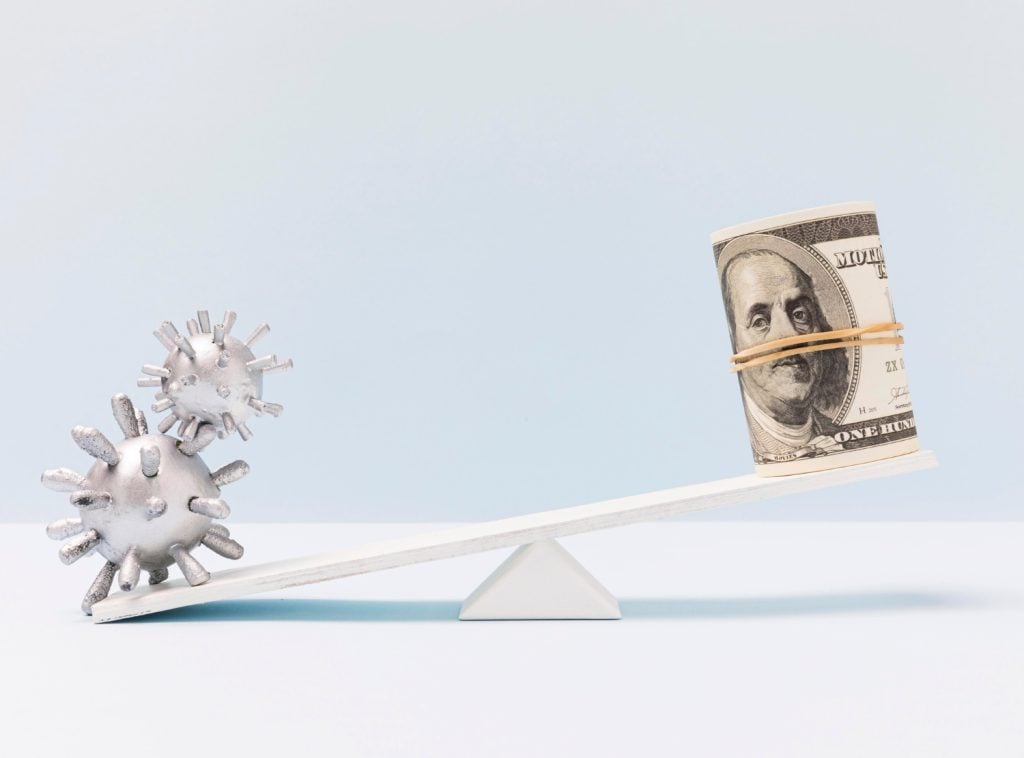
The housing market provides another major channel. Although many homeowners have fixed-rate mortgages and are therefore insulated from immediate changes in the federal funds rate, potential buyers can face higher financing costs when mortgage rates remain elevated. A higher monthly payment can reduce the amount a household is willing or able to spend on a home.
This can also affect related industries. When fewer consumers move or purchase homes, demand for furniture, appliances, renovations, home improvement services and other housing-related products can be affected.
Credit conditions are another important factor. The New York Fed reported that total U.S. household debt stood at $18.8 trillion at the end of the second quarter of 2026, a decrease of $13 billion from the previous quarter. It also reported that 4.7% of outstanding household debt was in some stage of delinquency.
These figures show that American households continue to carry substantial debt, even though aggregate balances declined slightly in the latest quarter. The impact of elevated interest rates can be very different for households depending on their balance sheets.
A household with significant savings and limited debt may actually benefit from higher interest income. Someone with substantial variable-rate debt, however, can experience the opposite effect. More income may have to go toward interest payments, leaving less money available for restaurants, travel, entertainment or large purchases.
The same applies to credit cards. Consumers who pay their balances in full each month can avoid much of the interest burden, while households carrying balances from month to month can face substantial financing costs.
This creates an important divide in the economy. Headline consumer spending can remain strong even while some households experience growing financial pressure. Higher-income households may continue spending because of stronger earnings and accumulated wealth, while lower-income households may be forced to become more selective.
Inflation adds another layer to the problem. The PCE price index increased 3.7% over the year in July 2026, while core PCE inflation was 3.3%. Both measures remained above the Federal Reserve’s 2% longer-run objective.
When prices rise while borrowing costs remain high, households face a double challenge. The same income must cover more expensive goods and services, while financing purchases can also cost more.
This does not necessarily lead to an immediate spending collapse. Consumers can adjust gradually. They may switch brands, search for discounts, reduce restaurant visits, postpone major purchases or spend more on necessities and less on discretionary items.
Retail data demonstrate why it is important to distinguish nominal spending from real purchasing power. Census retail sales increased 6.0% from August 2025 to August 2026, but the Census Bureau notes that the retail-sales figures are not adjusted for price changes. A portion of the increase can therefore reflect higher prices rather than an equivalent increase in the quantity of goods purchased.
For the economy, the distinction between spending more dollars and consuming more goods and services is critical.
What Strong Consumer Demand Means for Growth, Inflation and Interest Rates
The resilience of American consumers creates both opportunities and challenges for the economy. On the positive side, sustained spending supports economic growth. Businesses receive stronger revenues, employment can remain supported and investment can continue. Strong household demand can also reduce the risk of an abrupt economic slowdown.
But there is another side to the equation. If consumer demand remains exceptionally strong while the supply of goods and services cannot expand at the same pace, businesses may have more room to raise prices. Persistent demand can therefore make the fight against inflation more difficult.
This is one reason consumer spending matters so much to Federal Reserve policy. The central bank is attempting to balance its dual mandate while bringing inflation toward its 2% goal. In September 2026, the Federal Reserve said inflation remained elevated even though economic activity was expanding at a solid pace.
The latest projections also illustrate the challenge. The September FOMC projections put median PCE inflation at 3.7% for 2026, 2.3% for 2027 and 2.1% for 2028, with the longer-run projection at 2.0%. These are projections rather than guarantees, and actual inflation can be affected by energy prices, trade policy, geopolitical developments, productivity and other factors.
The Federal Reserve’s projections also show that policymakers expect interest rates to decline over time, although the projected path remains uncertain. The September projections placed the median federal funds rate at 3.6% at the end of 2026, 3.2% in 2027 and 3.1% in 2028.
For consumers, this means the future path of borrowing costs could depend heavily on how inflation and economic activity develop.
If consumer spending remains strong and inflation stays above target, interest rates could remain elevated for longer than households and businesses might prefer. That could continue putting pressure on interest-sensitive purchases.
If spending begins slowing significantly, however, inflationary pressure could weaken. A slowdown in demand could give the Federal Reserve more room to reduce rates over time, although policymakers would also need to consider employment and overall economic growth.
There is another important issue: consumer spending can be influenced by employment. Households generally feel more confident making discretionary purchases when they have stable employment and rising income. The Federal Reserve’s September statement said job gains had kept pace with the workforce and the unemployment rate had changed little.
This helps explain why spending has remained resilient despite elevated interest rates. Higher borrowing costs alone do not necessarily stop consumers from spending if household income remains strong.
At the same time, the relatively low personal saving rate deserves attention. The BEA reported a 3.0% saving rate in July. A low saving rate can support current consumption, but it may also mean some households have less financial protection against future income shocks or unexpected expenses.
The U.S. economy therefore faces a delicate balancing act. Strong consumer spending can support growth, but excessive demand can complicate the inflation outlook. Weak spending can help reduce inflation but could also weaken business revenues, employment and economic growth.
The key issue is not simply whether consumers spend more or less. The composition, financing and sustainability of that spending matter just as much.
Conclusion
U.S. consumer spending remains a critical indicator for the economy as interest rates stay elevated. Current data show that American households have continued to spend despite relatively restrictive financial conditions. Personal consumption expenditures increased in July, retail sales strengthened in August, and the Federal Reserve described domestic spending as resilient.
At the same time, the environment is not without risks. Inflation remains above the Federal Reserve’s 2% objective, with headline PCE inflation at 3.7% and core PCE inflation at 3.3% in July. The central bank responded in September by raising its federal funds target range to 3.75%–4.00%.
For consumers, higher rates mean that borrowing decisions require greater consideration. Credit-card balances, auto financing, personal loans and new mortgages can all carry meaningful costs when financial conditions remain tight. Meanwhile, persistent inflation can reduce the purchasing power of household income.
Yet consumers have demonstrated considerable adaptability. Spending has shifted toward services in recent data, while goods spending has been weaker. Households are also likely to continue adjusting purchasing patterns according to income, prices, borrowing costs and financial confidence.
The next phase of the U.S. economy will depend significantly on whether consumer demand can remain steady without keeping inflation too high for too long. Strong spending supports businesses and employment, but an economy driven by demand that consistently exceeds supply can make monetary policy more difficult. Conversely, a sudden consumer pullback could create pressure on businesses and employment.
For that reason, consumer spending will remain one of the most closely watched indicators in the U.S. economy. Retail sales, personal consumption expenditures, household income, savings, credit-card balances, loan delinquencies and employment data will collectively provide a clearer picture than any single monthly number.
The central question for the months ahead is therefore not simply whether Americans continue spending. It is how they are spending, how they are financing that spending, and whether their incomes can keep pace with prices and borrowing costs. Those factors will help determine whether the U.S. economy can maintain its current momentum while inflation gradually moves closer to the Federal Reserve’s long-term objective.